Fire Safety - Gamified eLearning
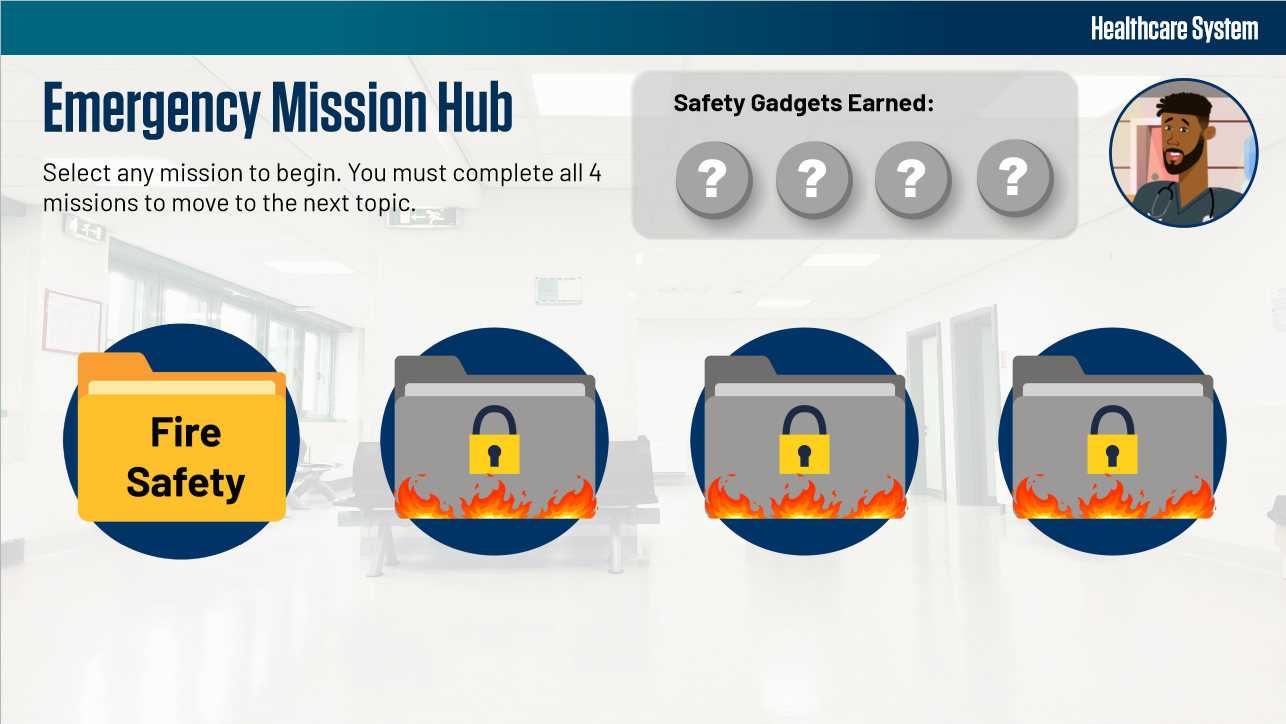
A gamified eLearning experience designed to transform mandatory annual fire safety training into an immersive, interactive learning experience. Instead of relying on outdated instructional videos, learners take an active role in responding to workplace fire emergencies and applying critical safety procedures.
Note: This is a shortened demo of the actual project and all identifying elements have been removed for proprietary and privacy purposes.
Audience:
All employees within a healthcare organization
Tools Used:
Articulate Storyline, Powtoon, Adobe Illustrator, Adobe Photoshop, Murf.AI Text-to-Speech
The Problem:
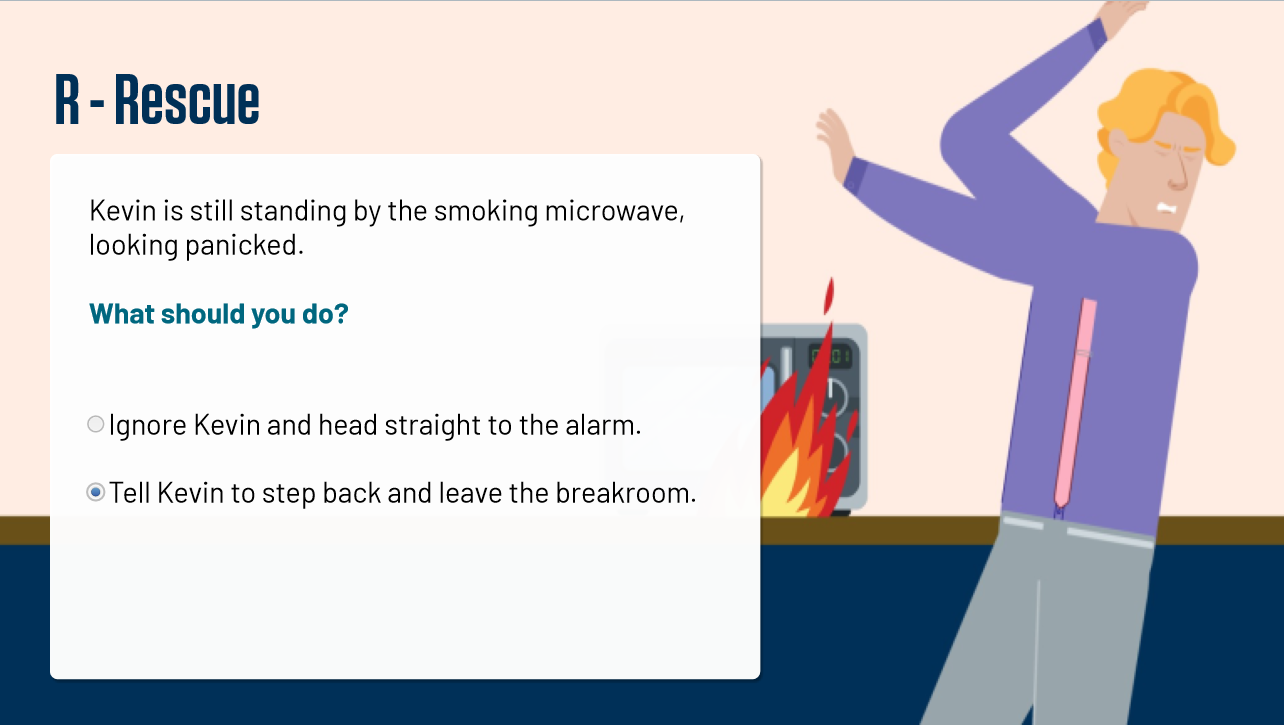
Employees were disengaged during traditional fire safety training, which relied heavily on outdated videos explaining the PASS (Pull, Aim, Squeeze, Sweep) and RACE (Rescue, Alarm, Contain, Extinguish/Evacuate) procedures.
For a mandatory annual training that employees encounter year after year, simply presenting the same information wasn't enough. I saw an opportunity to rethink the experience, move beyond passive video consumption, and create something that would capture attention while reinforcing essential emergency-response knowledge.
The Learning Solution:
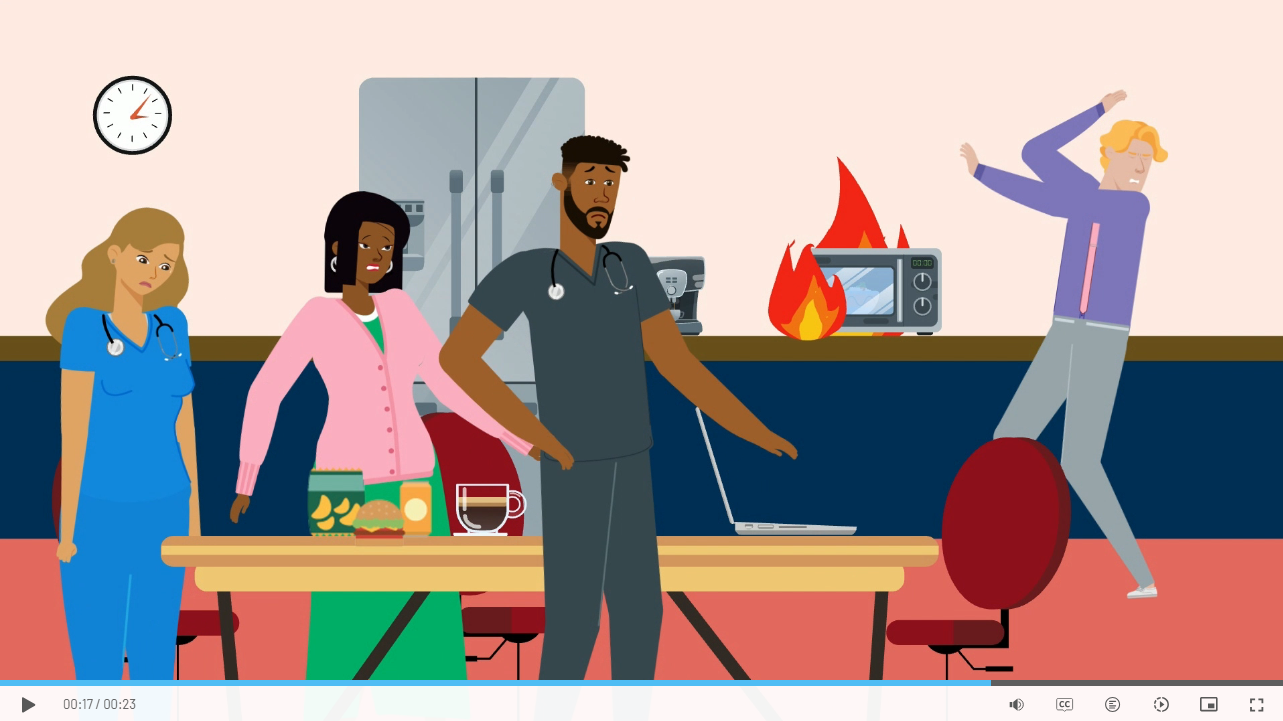
I designed a gamified, scenario-based eLearning experience that puts employees in the middle of workplace fire safety situations.
Rather than simply watching someone demonstrate what to do during an emergency, learners actively navigate scenarios, make decisions, and apply the PASS and RACE procedures in context.
The experience uses interactive challenges, visual storytelling, and game-inspired elements to turn routine compliance training into an opportunity for active participation and knowledge application.
Why This Approach?
Learning by doing: Learners practice applying fire safety procedures rather than just watching demonstrations.
Real-world application: Scenarios help employees connect safety procedures to situations they may encounter in the workplace.
Increased engagement: Gamification and interactive challenges give learners a reason to participate and stay engaged.
Knowledge reinforcement: Decision-making and immediate feedback help reinforce the appropriate actions to take during a fire emergency.